Lower back pain
Trigger points in the lower back drive a lot of chronic back pain. Dry needling reduces muscle tension and decreases pain so you can move and load the area without flaring up.
An advanced PT technique
Dry needling is an evidence-based physical therapy technique that involves inserting a thin needle into a trigger point in your muscles. The technique stimulates underlying myofascial trigger points and connective tissues, helping manage pain and mobility issues. About 20% of U.S. adults live with chronic pain, and dry needling is one of the most effective tools we have for it at our Franklin and Spring Hill, TN clinics.
A precise modality
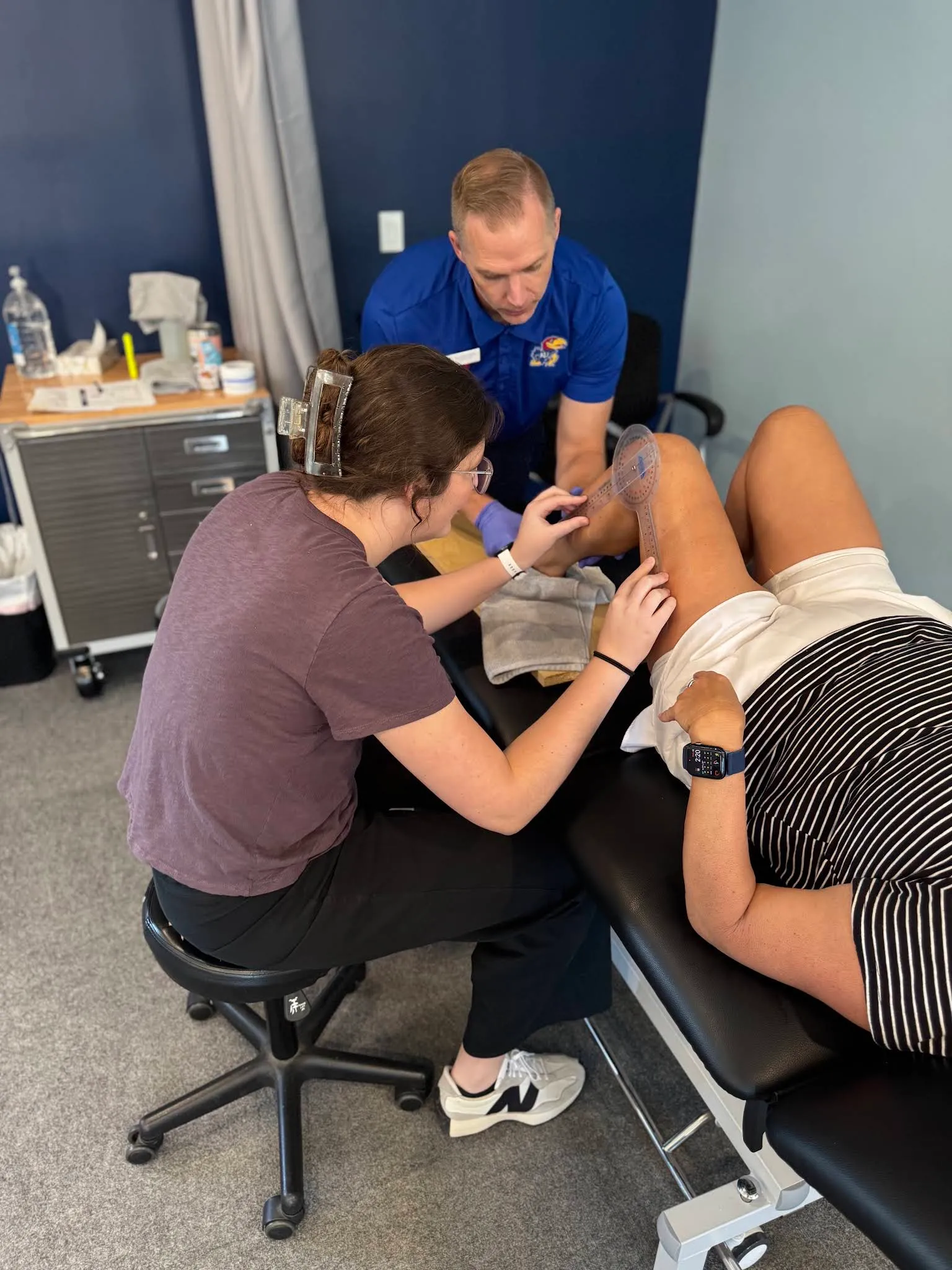
Dry needling at Beyond Physical Therapy is one of several evidence-based tools we use to manage acute and chronic musculoskeletal pain. The needle can reduce pain and improve motion, but the full PT plan helps you keep the change.
Multiple therapists across our Franklin and Spring Hill clinics hold dry needling certification, including specialists in orthopedic and pelvic health. Whether you’re dealing with chronic back pain, headaches, plantar fasciitis, or a stubborn shoulder, we’ll tell you straight whether needling fits your case.
Why we pair dry needling with the rest
Dry needling on its own can give meaningful relief, but it works better as part of a larger plan. We combine it with manual therapy (hands-on joint and tissue work), exercise therapy (strengthening, flexibility, and balance), and neuromuscular education (improving your control over your own movement). The needle releases the muscle. The exercise keeps it released.
Advanced modalities
Beyond PT also offers Class 4 Laser Therapy as part of a physical therapy plan when it fits your condition. Your therapist may use it as a supporting modality for pain, inflammation, and tissue irritability, then pair it with the movement work that keeps progress going.
What we treat
Find your condition below to see how we approach it, from the source of pain to the plan that gets you moving again.
Trigger points in the lower back drive a lot of chronic back pain. Dry needling reduces muscle tension and decreases pain so you can move and load the area without flaring up.
Whether from poor posture, sleep position, or a specific injury, neck trigger points respond well to needling. We pair it with mobility work and posture training.
Stress and muscle strain in the neck and shoulders trigger many chronic headaches. Releasing those trigger points reduces the frequency and severity of tension-type headaches.
Lateral epicondylitis. Dry needling enhances blood flow and triggers the body's healing response, reducing pain and inflammation in the outer elbow.
Heel pain that makes walking uncomfortable. Dry needling alleviates tension in the plantar fascia and surrounding calf muscles to improve foot function.
Among the most common conditions where dry needling has clinical evidence. Reduces muscle guarding around an arthritic knee, often improving range of motion and pain.
Rotator cuff trigger points, frozen shoulder, and post-injury shoulder dysfunction. Combined with manual therapy and progressive loading.
Glute, hip flexor, and piriformis trigger points. Dry needling pairs well with mobility and strength work for chronic hip dysfunction.
How it works
The path from your first visit to discharge. We measure progress at every step and tell you straight what's working.
Your therapist reviews your medical history, identifies sources of pain, and conducts hands-on testing for muscle strength, joint mobility, and overall function.
We map the specific trigger points contributing to your pain. Not every muscle that hurts has a trigger point, and not every trigger point is the right place to needle.
A thin, sterile needle is inserted into the trigger point. The session typically takes a few minutes per area. Mild discomfort is normal; the relief follows.
We almost always combine dry needling with hands-on manual therapy and a specific exercise program. The needle creates the window. The exercise locks in the result.
We measure pain, range, and function visit-to-visit. As things improve, we shift the focus from needling to active rehab.
If we missed yours, call us. We'll talk it through over the phone before you book.
Most patients feel a brief muscle twitch and a deep ache when the needle hits a trigger point. The discomfort is short, and most people describe the relief that follows as significant. We adjust to your tolerance throughout.
No. Both use thin needles, but the framework is different. Dry needling is a Western, evidence-based physical therapy technique targeting specific musculoskeletal trigger points. Acupuncture is rooted in Traditional Chinese Medicine and works along meridian lines.
Most patients see meaningful change in two to four sessions, though chronic conditions may need more. We give you an honest estimate after the first evaluation and reassess as we go.
Some patients experience mild post-needling soreness for 24 to 48 hours, similar to a workout. Bruising at the needle site is occasional and minor. We use sterile, single-use needles every time.
Pregnancy (in some areas), bleeding disorders, immune-compromised conditions, and severe needle phobia are all reasons to skip or modify. Your therapist screens for these in the evaluation.
Many insurance plans cover dry needling as part of a physical therapy treatment plan. We verify benefits before your first appointment so there are no surprises.
Related services
Our doctors handle a full range of conditions and rehab paths. Pick what's relevant to you.
Ready when you are
Talk to a Doctor of Physical Therapy. We'll tell you whether we can help — and if we can't, we'll tell you who can. No referral needed.